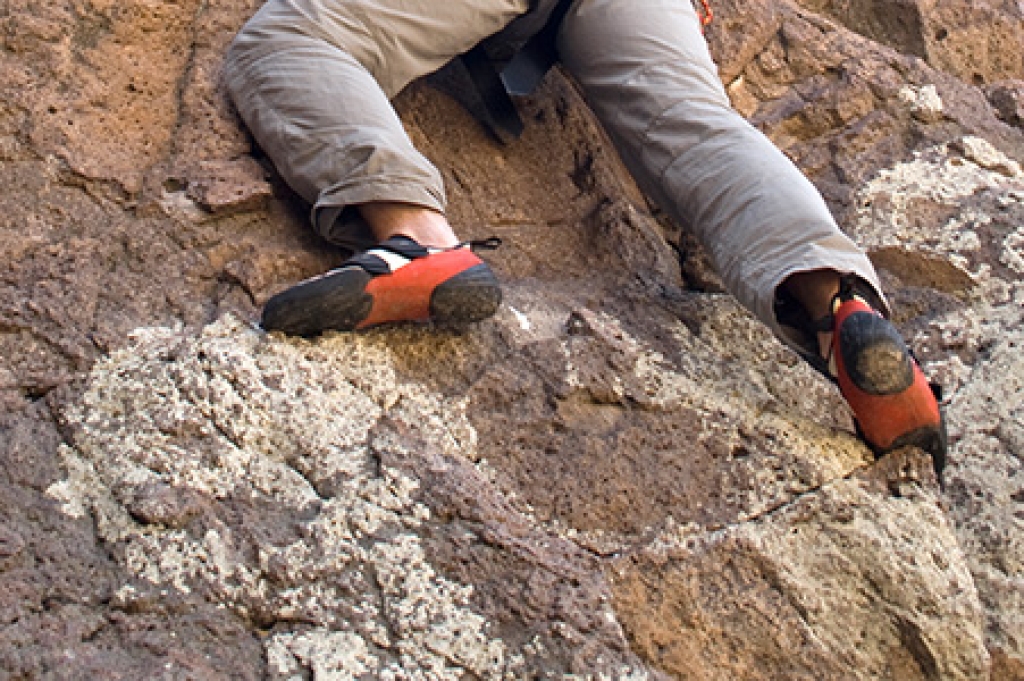
Some rock climbers assume that foot pain is simply part of the sport. It is true that climbing places stress on the feet and ankles. Small footholds concentrate body weight on an area, while down-turned climbing shoes hold the toes in a curled position. Falls can twist the ankle or force the foot against the wall. These demands can lead to heel pain, toe-joint irritation, or an ankle sprain. However, pain and injuries can also be related to the shoes worn. Sharp pain, numbness, or soreness that continues after removing climbing shoes should not be ignored.
Several injuries deserve attention. Pain behind the heel can involve the Achilles tendon, which connects the calf muscles to the heel bone. Pressure from a climbing shoe can contribute to a tender bump at the back of the heel. Pain under the heel can result from irritation of the thick tissue supporting the foot. Tight shoes may push the big toe inward and irritate its joint. An ankle sprain can leave the joint swollen, weak, or unstable. Continued climbing with pain can affect technique and place greater stress on other body parts.
A podiatrist can determine which part of the foot or ankle is injured and identify contributing factors. An evaluation includes a foot-and-ankle examination, a review of climbing habits, and an assessment of walking and balance. Imaging can show a fracture or other damage when there is concern. Treatment includes supportive padding, a brace, or a custom orthotic that improves foot position in everyday shoes. A podiatrist can recommend climbing-shoe features suited to the patient’s foot shape and provide guidance for returning safely. Serious fractures, torn tendons, or unstable joints sometimes require surgery. Prompt care can limit further damage and support a comfortable return to the sport. If you have foot or ankle pain from climbing, it is suggested that you schedule an appointment with a podiatrist for a diagnosis and appropriate treatment.
Sports related foot and ankle injuries require proper treatment before players can go back to their regular routines. For more information, contact Mark Isenberg, DPM of Center for Podiatric Excellence. Our doctor can provide the care you need to keep you pain-free and on your feet.
Sports Related Foot and Ankle Injuries
Foot and ankle injuries are a common occurrence when it comes to athletes of any sport. While many athletes dismiss the initial aches and pains, the truth is that ignoring potential foot and ankle injuries can lead to serious problems. As athletes continue to place pressure and strain the area further, a mild injury can turn into something as serious as a rupture and may lead to a permanent disability. There are many factors that contribute to sports related foot and ankle injuries, which include failure to warm up properly, not providing support or wearing bad footwear. Common injuries and conditions athletes face, including:
- Plantar Fasciitis
- Achilles Tendinitis
- Achilles Tendon Rupture
- Ankle Sprains
Sports related injuries are commonly treated using the RICE method. This includes rest, applying ice to the injured area, compression and elevating the ankle. More serious sprains and injuries may require surgery, which could include arthroscopic and reconstructive surgery. Rehabilitation and therapy may also be required in order to get any recovering athlete to become fully functional again. Any unusual aches and pains an athlete sustains must be evaluated by a licensed, reputable medical professional.
If you have any questions please contact our office located in Pensacola, FL . We offer the newest diagnostic and treatment technologies for all your foot and ankle needs.
