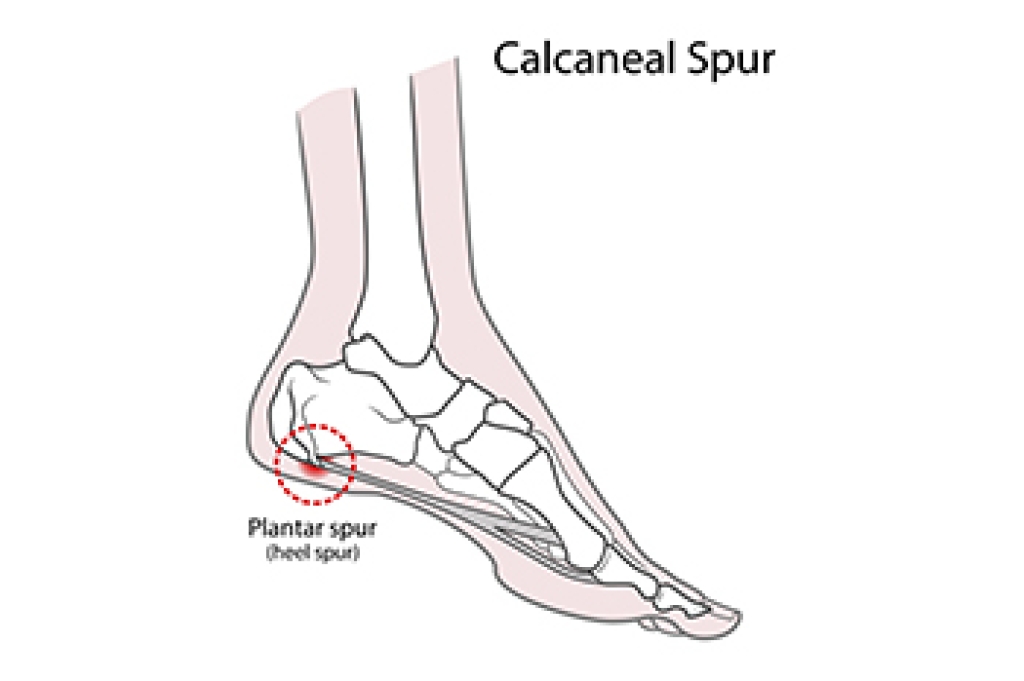
Heel spurs are bony growths that develop on the heel bone. They can form where the plantar fascia, a strong band of tissue along the bottom of the foot, attaches to the heel. Repeated strain on this tissue and the foot muscles can contribute to spur formation. Heel spurs are also linked with plantar fasciitis, which causes irritation in the plantar fascia. However, a heel spur does not always cause pain. Some people have a spur that is discovered on an X-ray even though they have no heel symptoms.
When heel spurs do cause symptoms, patients can feel pain and tenderness on the bottom of the heel. Discomfort can become more noticeable when standing, walking, or running. Some people describe the pain as feeling like pins pressing into the bottom of the foot. Because several foot problems can cause heel pain, identifying the source is important. A podiatrist can examine the heel, ask about activities that trigger discomfort, and evaluate foot structure. Imaging can also show whether a bony growth is present and help confirm the diagnosis.
A podiatrist can develop a treatment plan based on the cause and severity of heel pain. Treatment can focus on reducing pressure around the heel and improving the way the foot functions. Options can include custom orthotics, supportive shoe recommendations, and targeted stretching. A podiatrist can also evaluate whether plantar fasciitis or another foot problem is contributing to the symptoms. When pain continues despite conservative treatment, other treatment choices can be discussed. If you have symptoms of heel spurs, it is suggested that you schedule an appointment with a podiatrist for diagnosis and treatment.
Heel spurs can be incredibly painful and sometimes may make you unable to participate in physical activities. To get medical care for your heel spurs, contact Mark Isenberg, DPM from Center for Podiatric Excellence. Our doctor will do everything possible to treat your condition.
Heels Spurs
Heel spurs are formed by calcium deposits on the back of the foot where the heel is. This can also be caused by small fragments of bone breaking off one section of the foot, attaching onto the back of the foot. Heel spurs can also be bone growth on the back of the foot and may grow in the direction of the arch of the foot.
Older individuals usually suffer from heel spurs and pain sometimes intensifies with age. One of the main condition's spurs are related to is plantar fasciitis.
Pain
The pain associated with spurs is often because of weight placed on the feet. When someone is walking, their entire weight is concentrated on the feet. Bone spurs then have the tendency to affect other bones and tissues around the foot. As the pain continues, the feet will become tender and sensitive over time.
Treatments
There are many ways to treat heel spurs. If one is suffering from heel spurs in conjunction with pain, there are several methods for healing. Medication, surgery, and herbal care are some options.
If you have any questions, please feel free to contact our office located in Pensacola, FL . We offer the newest diagnostic and treatment technologies for all your foot care needs.
